The Complete Guide to Falconry: History, Terminology, and Training
There’s a split second before it happens. You’re standing in the woodland, breath held, aware of everything. The smell of damp earth. The sound of wind in leaves. The weight of the glove on your arm.
Then the world narrows.
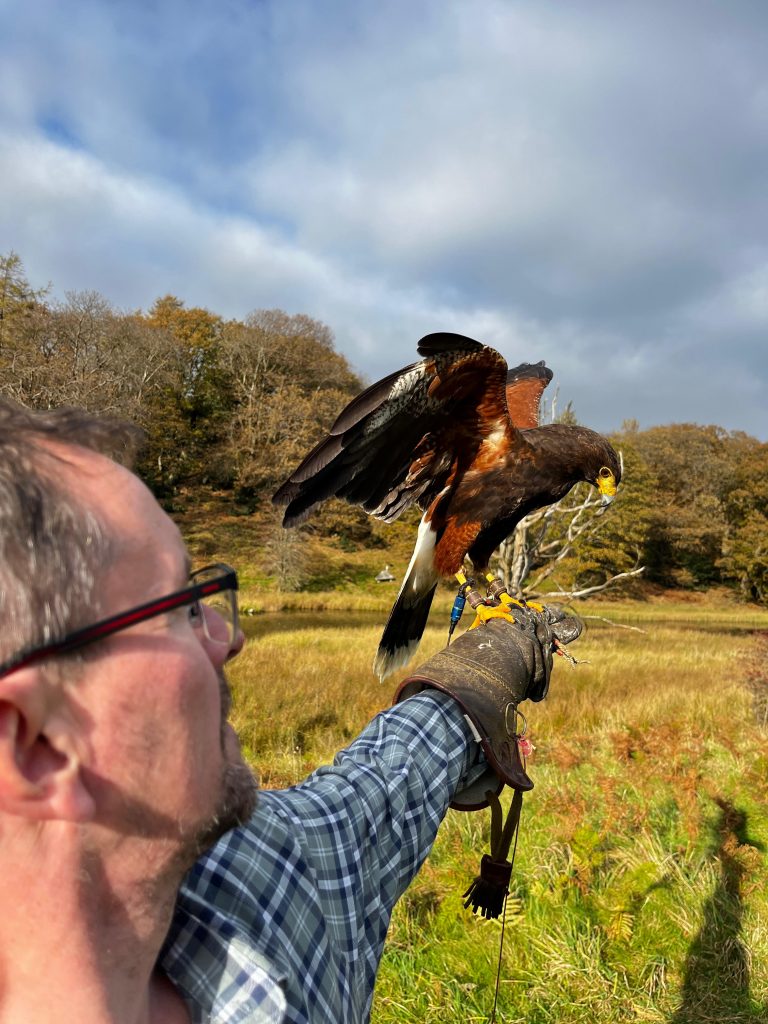
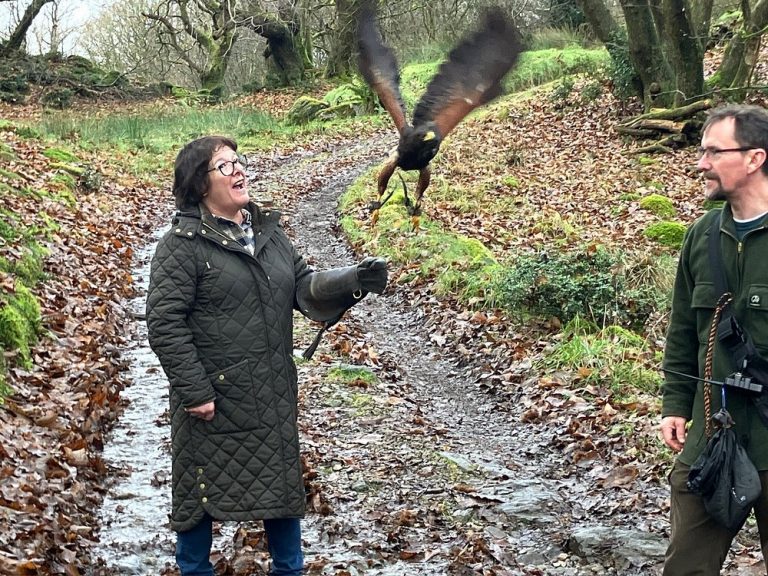
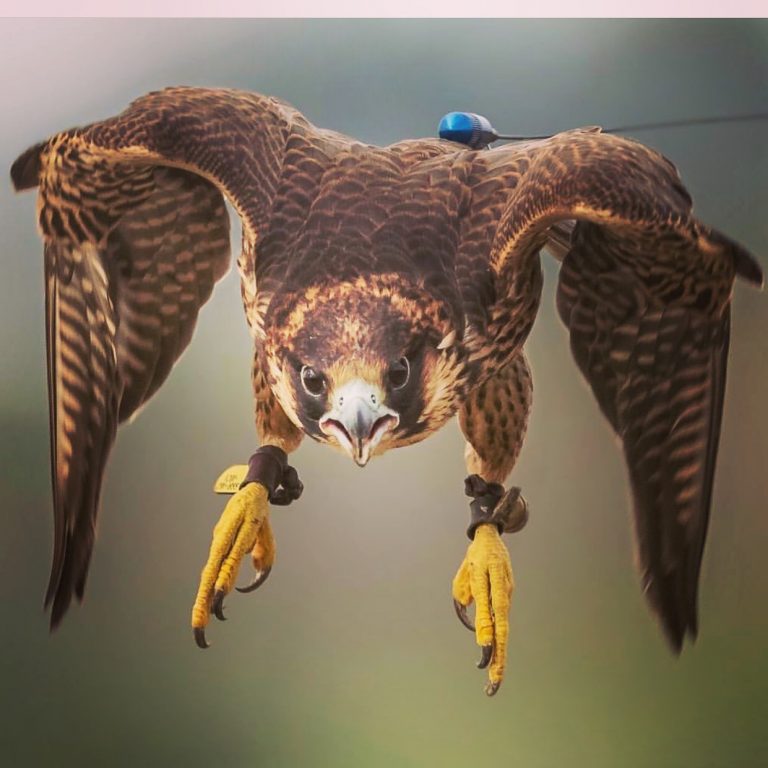
The bird descends. Fast. Direct. Purpose driven and totally focused on you. And suddenly there’s solidity on your fist. Grip. Presence. You’re looking into eyes that have hunted for generations, that understand sky and distance and time in ways your human brain can barely process.
That’s when it clicks. You’re not just holding a bird. You’re connected to something that predates civilization itself. Something that knows no ego and needs none.
Falconry gets thrown around a lot. You hear it referenced in movies set in castles. You see it mentioned in nature documentaries. You might have a vague sense it involves birds and history and royalty. But falconry as an actual lived practice, as something with philosophy and depth and genuine meaning? Most of us don’t really understand it at all.
This isn’t a light read about falconry. It’s not a surface level overview of falconry history or falconry facts. Instead, we’re going to dig into what falconry actually means, where it came from, how people talk about it, and crucially, what your own experience of falconry might actually feel like.
Whether you’re booking with us in the future or just curious about why falconry keeps showing up in conversations about meaningful experiences, and on the TV shows you watch, by the end you’ll understand why humans have been drawn to falconry for millennia.
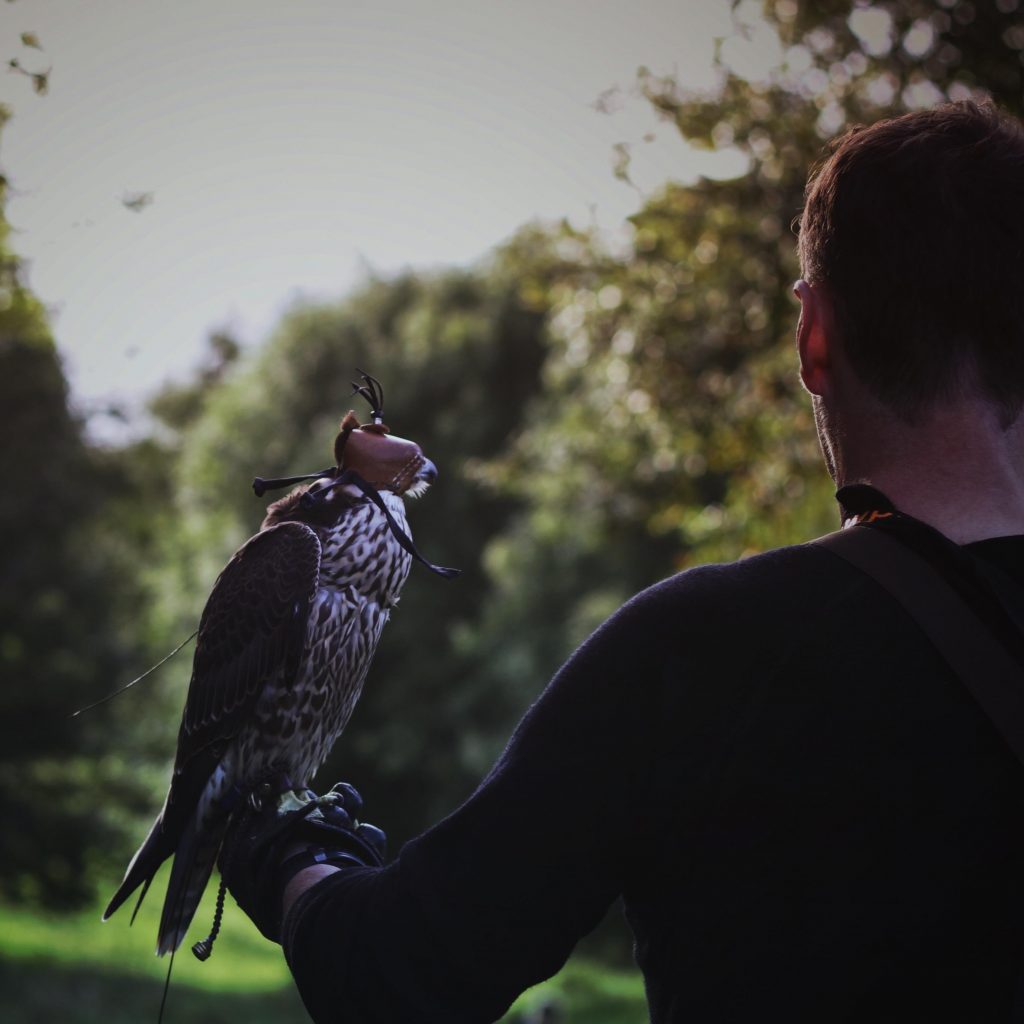
Table of Contents
WHAT IS FALCONRY REALLY?
Falconry, is defined by UNESCO is a living, human heritage that ‘is the traditional art and practise of training and flying falcons (and sometimes eagles, hawks, buzzards and other birds of prey).
Historically, falconry meant hunting. Maybe a means of obtaining food, but most likely just our awe at watching birds of prey means falconry has acquired other values over time, and has been integrated into communities as a social and recreational practice and as a way of connecting with nature.
The core of what makes falconry distinct is this: the bird maintains its wildness or at least instinct and intuition.
All diurnal birds of prey are termed “hawks” in the language of falconry and all hunt naturally in their wild state.
The skill of the falconer is to harness this natural hunting ability by training a hawk to hunt in partnership. The bird isn’t domesticated (that would require hundreds of years of selective breeding). It’s not tamed into compliance. It’s a mutual bond that takes huge amounts of trust gained over months and potentially lost in seconds.
What keeps the bird coming back isn’t because it’s been broken in; It’s because the arrangement works for both the human and the bird. The bird gets food, shelter, protection and gets to do what it naturally does (hunt), and maintains autonomy and it gets all this regardless if it is successful at catching or not, something that doesn’t happen in the wild. The human gets to witness and participate in that ancient innate knowledge the bird has and puts us back into a state of egoless bliss.
That’s the foundation of what falconry actually is. Not control. Not performance, but a partnership with something that still has a pure instinct, even in our presence.
THE HISTORY – WHY FALCONRY MATTERS
Walk back far enough in human history and you’ll find falconry. Not everywhere at first, but everywhere eventually.
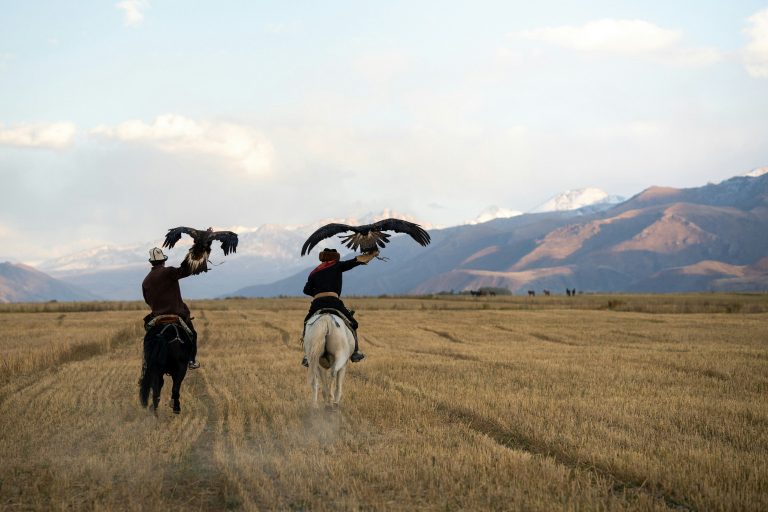
Falconry has been practised for over 4000 years. In the deserts of Central Asia, people figured out that if they respected a wild bird and spent time with it, something remarkable could happen. In the forests of medieval England, the same discovery. In the courts of emperors spanning continents. Somehow, humans independently arrived at the same impulse: that connection with a bird of prey mattered.
That tells you something important about what we’re actually looking for.
Stelae depicting falconry that were created by the Hittites date to the 13th century BCE, and cave paintings from prehistoric sites may represent even earlier references to falconry. What we do know is that for the last 2,000+ years, falconry has been continuous and deliberate practice across cultures that had no contact with each other.
In medieval Europe, falconry flourished in western Europe and the British Isles in the Middle Ages among the privileged classes. Society literally organized itself around it. The type of bird you were allowed to fly indicated your rank. Your access to hunting grounds mattered. Your falconry equipment was a status symbol.
But more than that, falconry was how the elite spent their time. It wasn’t a weekend hobby. It was the thing that everyone did, and falconry wasn’t purely an elite pursuit everywhere. In Persia, in Mongolia, across Asia, falconry belonged to common people too. Merchants. Traders. Hunters. The practice transcended class because the thing it offered transcended wealth and status.
So what was it offering?
Connection. Autonomy. The privilege of being chosen by something wild. And the ability to hunt and gain food.
In Britain specifically, falconry has an unbroken thread connecting us to medieval times. The same landscapes where falconry happened then is where it happens now. The techniques are fundamentally unchanged. A falconer working with birds today uses methods developed centuries ago because those methods work.
When you participate in falconry here in the UK, you’re not engaging with a reimagined historical recreation. You’re participating in something genuinely continuous. That matters more than most people realize.
The fascinating thing about falconry is that it’s never really died out. During the 17th century, after the advent of the shotgun and after the enclosure of open lands and numerous social upheavals, falconry virtually died out, surviving in Europe largely through the enthusiasm of members of hawking clubs.
Yet it persisted.
Because falconry isn’t actually about acquiring food (that stopped being its primary purpose centuries ago if it ever was). It’s about something else. Connection. Presence. The experience of genuine exchange with another species.
In the modern world, falconry has become even more interesting because it’s stripped down to its essence. Stripped of the hunting purpose, what remains is the pure relationship. And that’s what draws people to it now.
THE LANGUAGE – FALCONRY TERMS EXPLAINED
If you’re going to actually understand what happens when you experience falconry, you need to know how people talk about it.
The Birds Themselves
The word “falconry” technically comes from falcons (a specific family of birds), but in modern falconry practice, we use it much more broadly. You’ll encounter different species depending on where you are and what a particular falconer specializes in.
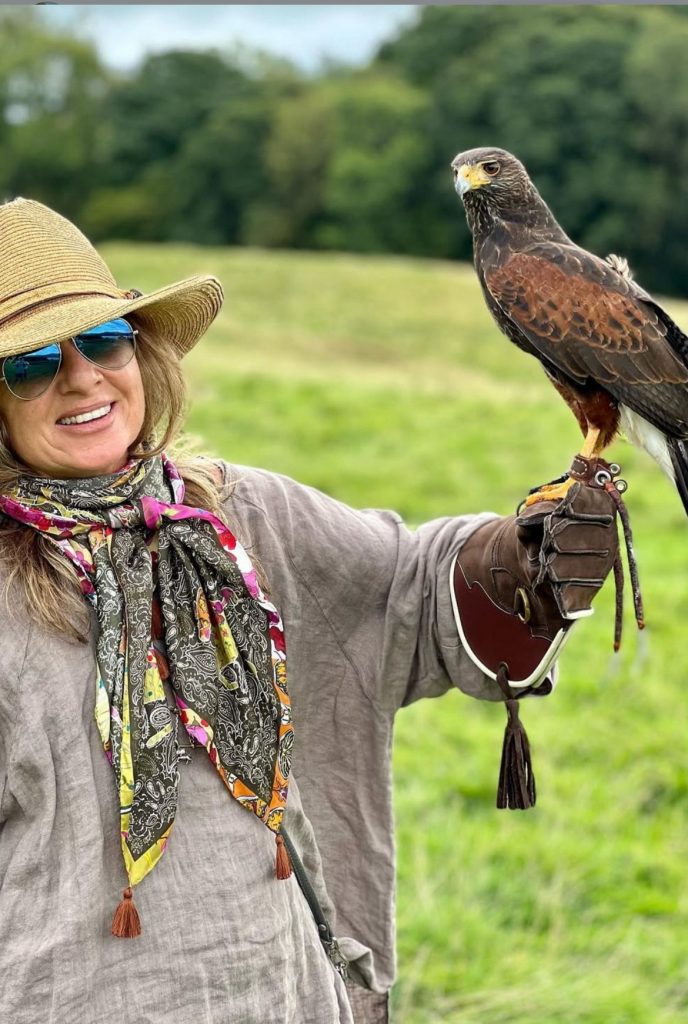
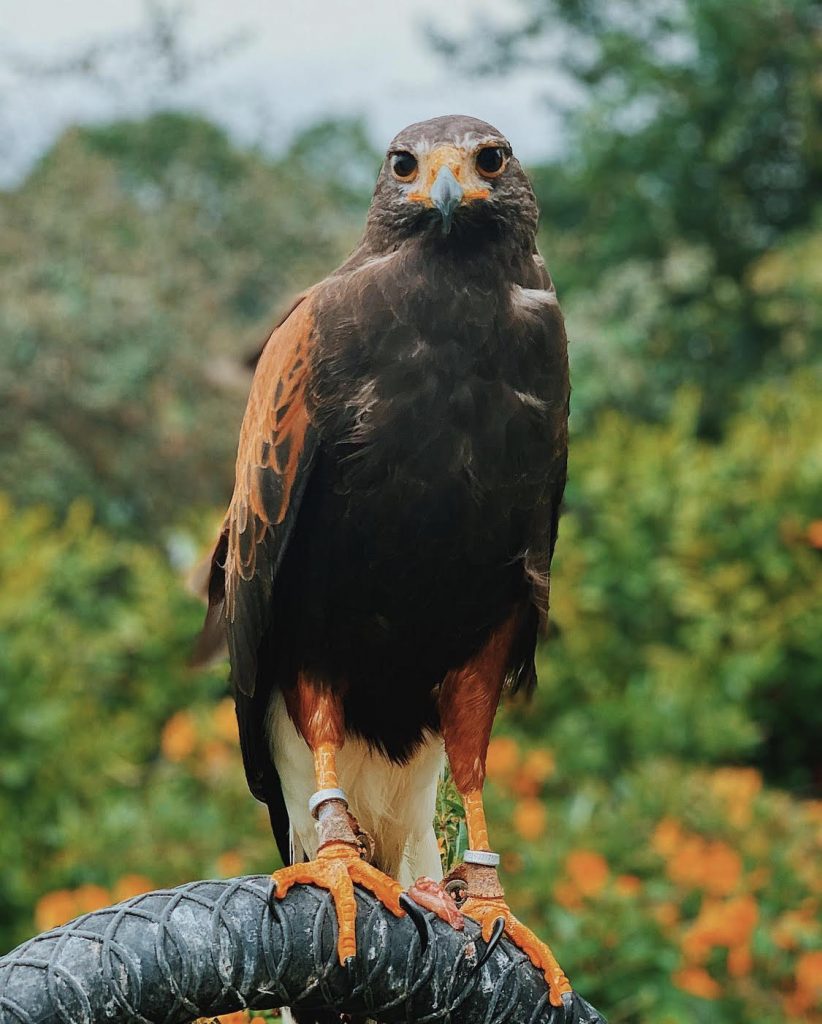
Harris hawks show up everywhere in contemporary falconry experiences. They’re intelligent in obvious ways, social (they naturally hunt in cooperative groups in the wild), and they seem to enjoy the partnership aspect of falconry. That makes them ideal for what we do here, on the hawk walks even without the hunting.
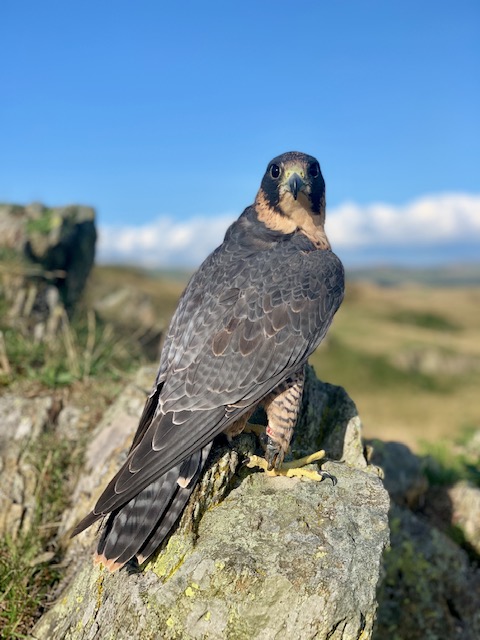
Peregrines, red kites, golden eagles, merlins, sparrowhawks, buzzards these are all birds you might encounter in various falconry centres depending on where and how someone practices but we keep our walks with the Harris hawk as it remains the most comfortable with friends for a day.
In falconry terminology, whichever bird you’re working with gets called the raptor (not because it’s always a true raptor taxonomically, just because that’s what falconry people say).
The Gear
Jesses are leather straps attached to the bird’s legs. They’re short (usually just a few inches) and they’re essential for falconry because they give the falconer a way to hold the bird safely without restricting it or causing injury. They’re designed with the bird’s comfort in mind.
The falconers glove (sometimes called a gauntlet) is what you wear. It’s thick leather, usually made from goat or deer leather, and it protects your hand while giving the bird a comfortable place to grip. The weight of it is significant. The feel of it changes how you hold your arm, how aware you become of your own body.
A creance is a thin line attached to the bird when someone is still building trust (which is usually at the beginning of any falconry relationship). It lets the bird fly freely while keeping it from disappearing into the trees. In a falconry experience with us, the creance gives everyone involved a sense of safety.
FALCONRY TERMS YOU USE TODAY
‘Under the thumb,’ ‘wrapped around my little finger’ ‘fed up’ and ‘cadge a lift’ are all falconry terms that are used today.
If you ask you falconer, he’ll be able to tell you more about the language used in falconry and how it is used still in everyday terms.
HOW FALCONRY TRAINING WORKS
The Foundation: Positive Reinforcement and Food
Falconry training is built entirely on positive reinforcement. Raptors are primarily motivated by food, not by submission or dominance or affection the way some animals are. They’re solitary, territorial hunters. They don’t have a social structure the way wolves or dogs do that is other than the Harris hawk, which is often called “Wolf of the sky”. Even so a falconer can’t use dominance-based training with any bird of prey including the Harris hawk (which works on other social animals that have hierarchies).
Instead, the entire process relies on a complex relationship first bridged by food then flight then hunting or simulated chase, shelter and even protection. Simply put when the bird does what the handler wants, it gets rewarded with food. However positive habituation can mean a poor lesson is taught resulting in behaviour the handler do not want. Falconry can’t just be learned from books but needs a mentor and a handler that is willing to learn not only from others but the bird and the situation. This isn’t coercion. It’s mutual arrangement. The bird expends energy (which it carefully conserves in nature), and the falconer makes sure that energy expenditure is immediately rewarded with something the bird values.
Weight management is absolutely critical in the early stages to this process. A bird in proper condition is muscular and fit. Too light, and the bird becomes weak vulnerable to illness and won’t trust the handler and might go to hunt for itself or simply fly away. Too heavy, and the bird loses motivation to work because it’s already satisfied and wants to hide away and discretely digest its food, that’s exactly where “Fed Up” comes from. A bird look as though it is sulking and ignoring the world, but it is simply full, fat and fed up. Falconers manage weight constantly, carefully, measuring it daily and adjusting food intake to maintain that precise middle ground where the bird is motivated but healthy. This is where science meets ancient art, because falconers have understood for thousands of years what modern behavioural science now confirms: a bird’s motivation is directly tied to its metabolic and mental state. You must feed an athlete and you must enable the birds natural instinct to peruse. Food alone will only bend a bird to your will temporarily but the art is for a bird to be keen to work with you out of trust and past demonstration of your worthiness to be its partner and it should not be hungry.
Manning: The First Phase
The very beginning of falconry training is called “manning.” Manning is the process of getting the bird accustomed to human presence, human handling, and the human world in general. Historically, manning meant spending time with the bird, giving it tidbits of meat, bridging the relationship allowing it to become accustomed to a hood (which keeps the bird calm by limiting visual stimuli).
But modern falconry understands manning more subtly than that. The goal isn’t to make the bird dependent on humans as food suppliers (which can cause problems if the bird is ever released). The goal is to create a bird that feels safe and secure around its human partner, that isn’t governed by fear responses, that can learn effectively.
Early training happens in controlled environments. Falconers minimise distractions deliberately. Some start in reduced lighting to help the bird feel less overwhelmed. The bird learns that the falconer’s presence means food, means safety, means nothing to fear. As the bird becomes more confident, it gradually encounters more stimuli. But this is intentional and paced. A bird introduced too quickly to chaos will develop fear-based behaviors that can take months to overcome if ever. If a bird is in your presence then just as in a marriage everything that happens which is bad is your fault.
Throughout manning, the falconer is watching the bird’s body language constantly. Is the bird ready? Is it stressed? Does it need more time? Training isn’t on a schedule. It’s on the bird’s timeline.
Successive Approximation: Building Complex Behaviors
Once a bird is manned and has developed trust, falconers use a technique called “successive approximation” to build more complex behaviors. This means reinforcing small steps toward the final goal.
For example, the goal is to get the bird to fly to the falconer’s glove. Initially, the bird might be rewarded just for looking at the glove. Then for touching it with one foot. Then for stepping fully onto it. Then for hopping toward it. Then for flying short distances to it. Over time, through hundreds of small reinforcements, the bird learns to fly longer and longer distances to the falconer’s glove.
This method isn’t unique to modern falconry. Historical falconers discovered and refined these techniques thousands of years ago, and modern behavioural science (particularly B.F. Skinner’s work on operant conditioning) eventually explained why these methods worked. But the techniques themselves are ancient but have been modified immensely in the last decade.
Creance Flying: Freedom With Safety
Once a bird has learned to return to the glove reliably indoors, falconers introduce the creance. A creance is a long, light line attached to the bird. It allows the bird to experience true flight in the open air while remaining connected to the falconer. If something goes wrong, the creance ensures the bird won’t be lost.
Creance flying is where falconry stops being training and starts being real partnership. The bird flies. Really flies. Experiences what it evolved to do. And chooses to return to the falconer. This is where you see the actual relationship developing, because the bird has genuine freedom and is still choosing to come back.
The Hood and Other Equipment
Equipment in falconry serves specific purposes beyond what most people realize. The hood, for instance, isn’t cruel or restrictive. It’s actually a tool for keeping the bird calm. We as humans think all animals conceptualise the world as we do. We give them human characteristics, and our ego thinks this is good. But raptors are visual hunters. When they can’t see, they relax, they have no control over that behaviour, we can’t understand it because we are not them. We think about ourselves, think about what just happened, think about what is going to happen in the future, but animals live in the present moment, they may not be aware of their consciousness because they don’t need to be, they are living in this moment. The hood prevents the bird from being startled by sudden movements or stimuli. It’s used during transport, during initial training, during moments when the bird could get stressed. It’s removed after a perceived threat in the birds eyes goes away, as the bird becomes more confident and secure. If the hood was disliked the way we would dislike a hood, the next time we fly them free they would bugger off.
Jesses (the leather straps on the bird’s legs) serve multiple purposes. They allow the falconer to hold the bird safely without injury. They’re designed specifically so the bird can move and grip without getting tangled. Different falconers use different jess styles, but all of them prioritize the bird’s comfort and safety.
The glove itself is a perching surface. It’s not comfortable for the falconer’s hand (it’s heavy), but it’s comfortable for the bird. The leather distributes the bird’s weight evenly and protects our soft skin from the talons and from the raw meat being biologically injected into us. The glove is worn on the left arm (traditionally), freeing the right hand for other tasks or for offering food rewards.
Why This Matters: The Bird Remains Wild
Here’s what’s crucial to understand: throughout all of this training, the bird never becomes domesticated. It never becomes a pet. It remains what it evolved to be: a wild predator.
A domesticated animal is one that’s been selectively bred for hundreds of years to live alongside humans, to accept human dominance, to have traits that make it compatible with captivity. generation after generation, bred for a trait deemed desirable from the humans part. Falconry birds aren’t domesticated. They’re wild raptors, even though they are bred in captivity, that have learned, through training, to cohabit with humans. The difference is profound.
This is why falconry birds never become reliable or predictable the way dogs or cats can. Some days the bird is keen. Some days it’s lazy. Some days something spooks it and it behaves differently than it did yesterday. That’s because it’s wild. It’s choosing to cooperate, not programmed to cooperate, we have to read the birds language not force it to listen to ours.
And that choice, that moment to moment decision to work with the falconer, is what makes falconry distinct from training a domestic animal such as a dog (which I also love). We as humans, as none intuitive as we have become, can feel that tentative bound with our bird, can be broken in a flight, so we use all our presence to make our world, a world our birds want to remain within by trust not force and if we could only be like that more in our day to day lives with each other, we’d all be a lot happier.

One Comment